







The FIA, Formula 1 and the teams have reached an agreement after intensive consultation on a number of rule changes that will take effect immediately, at the next Grand Prix in Miami. The FIA announced this in a statement. The World Motorsport Council (WMSC) still has to agree, but in principle, that is a formality.
Read more FIA President issues statement after F1 rule changes: ‘Thanks to the drivers’
The changes are a direct result of the massive criticism from drivers and fans regarding the implementation of the new technical regulations following the first three races of the season. Max Verstappen was one of the main critics. He called the new-style Formula 1 ‘Formula E on steroids’ and artificial. Verstappen received support from almost all his colleagues on the grid. Especially the fact that people had to focus more on energy management than on pure racing was a thorn in the side of fans and drivers.
The changes can be implemented in the short term. More radical changes require more time. However, discussions about this have also taken place behind the scenes.
Below is an overview of the changes per component, which will therefore take effect immediately (GP Miami).
Qualifying
Adjustments to energy management parameters, including a reduction in the maximum allowed regeneration from 8MJ to 7MJ, aimed at reducing excessive energy recovery and encouraging more consistent full-throttle driving. This change aims for a maximum superclipping of 2-4 seconds.
Also read: Mercedes team boss Wolff hopes for ‘changes with a scalpel, not a baseball bat’
The peak power of superclipping has been increased to 350 kW (previously 250 kW), further reducing the time required for charging and decreasing the driver’s workload in terms of energy management. This will also be applied in race conditions. The number of events where alternative, lower energy limits may apply has been increased from 8 to 12 races, allowing for greater adaptation to circuit characteristics.
Race
The maximum power available via boost in race conditions is now limited to +150 kW (or the car’s current power level upon activation if higher), to limit sudden speed differences.
Read more Column Giedo van der Garde: ‘Max will leave Red Bull sooner than Lambiase’
The deployment of the MGU-K will be maintained at 350 kW in crucial acceleration zones (from corner exit to braking point, including overtaking zones), but will be limited to 250 kW in other parts of the lap. These measures are designed to reduce extreme speed differences while preserving overtaking opportunities and general performance characteristics.
Race Starts
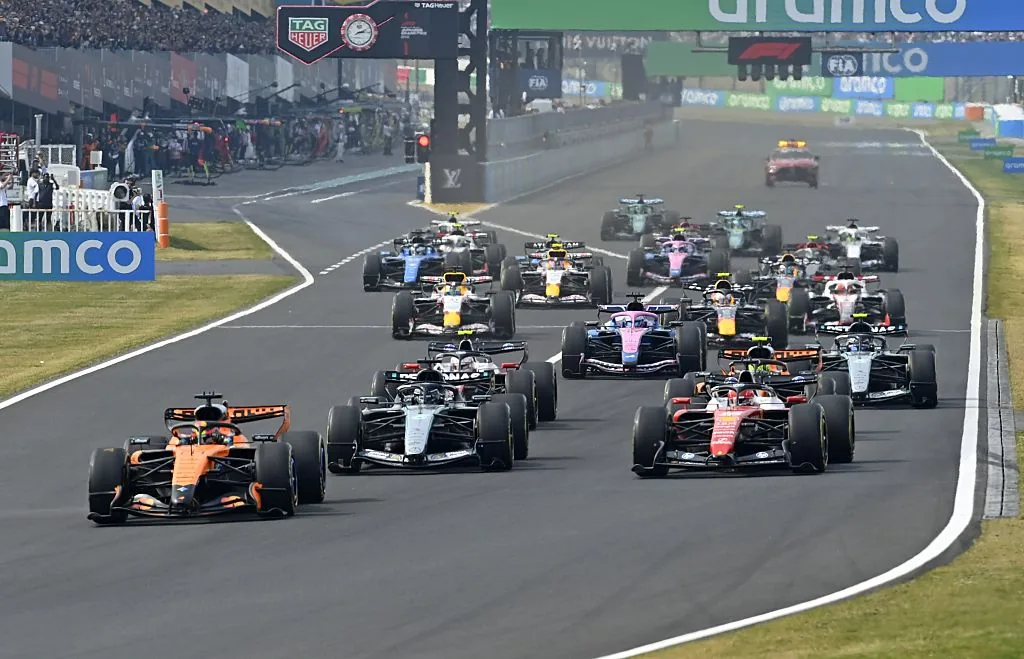
A new low-power start detection system has been developed, capable of identifying cars with abnormally low acceleration shortly after clutch release. In such cases, automatic MGU-K deployment is activated to ensure a minimum acceleration level and mitigate risks, without introducing a sporting advantage.
Also read: FIA President issues statement on rule changes: ‘Thanks to the drivers’
A corresponding visual warning system will be introduced, activating flashing lights (rear and side) on the affected cars to warn following drivers. An energy counter reset at the start of the formation lap has also been implemented to correct a previously identified inconsistency in the system.
Wet Conditions
Tire warmer temperatures for intermediates have been increased following driver feedback, to improve initial grip and tire performance in wet conditions. Maximum ERS deployment is reduced, limiting torque and improving car control in low-grip conditions.
Rear light systems have been simplified, with clearer and more consistent visual signals to improve visibility and reaction time for following drivers in poor conditions.
Read more Norris named Laureus winner: ‘One of the most prestigious awards you can win’
Read everything about GP Miami here