




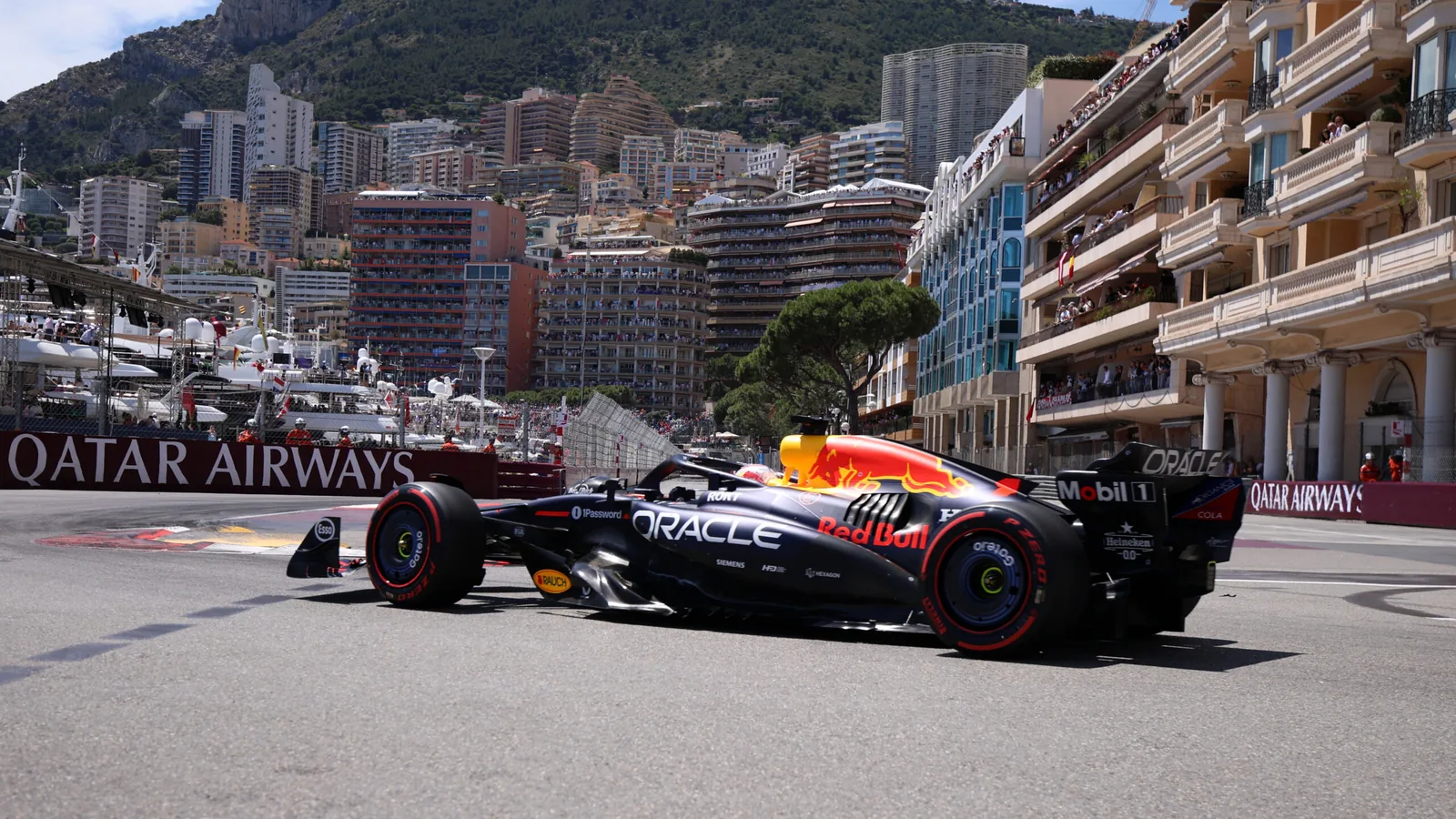
The Monaco GP is just around the corner! The iconic race is known as ‘the crown jewel’ of the F1 calendar and has made the small city-state the unofficial home of the premier class. Yet, the race in 2026 is not very popular. Overtaking on the narrow street circuit has proven to be almost impossible for years. Last year, the organization made a desperate attempt to spice up the spectacle with a mandatory two-stop strategy, but that rule has since been scrapped. What went wrong?
Read more Engine boss Red Bull proud of progress: ‘Aiming for first victory’
The debate about the sporting value of the Monaco GP has been raging for some time. The street circuit is loved by fans and drivers alike, but with the current F1 cars, qualifying is usually more exciting than the race itself. The chances to overtake a competitor are minimal. That’s why a proposal was approved last year to mandate extra pit stops. The idea was simple: create more strategic variety and offer extra opportunities for a so-called undercut; pitting earlier than your competitor to gain a position.
Failed experiment
However, in practice, it backfired. Especially the midfield teams benefited from the mandatory two-stop and from the fact that overtaking in Monaco is almost impossible. For example, Racing Bulls and Williams deliberately held up the entire field with one car, allowing the other driver to make an extra pit stop later without losing positions. Because overtaking was so difficult, the held-up cars could hardly react. This resulted in, to say the least, strange scenes.
It is therefore not surprising that the rule was scrapped again for 2026. The experiment clearly did not have the intended effect. “It was very exciting,” grinned a sarcastic Max Verstappen after the last Monaco GP to the media. “I was on the edge of my seat every lap. Fantastic, really. Shall we make four pit stops mandatory next year instead?” he joked. “For us, it really did nothing at all.”
Read more Andrea Stella stands behind Lando Norris: ‘Ferrari the favorite in Monaco’
Too small circuit
The core of the ‘Monaco problem’ still lies in the layout of the circuit, not in the strategic possibilities. Modern F1 cars are simply too big and heavy to race properly on the small streets of the principality. During qualifying, the drivers push the limits of the circuit and the bravest are rewarded with the best starting positions. This produces spectacular images and always generates enthusiasm among the public. On Sunday, however, the infamous ‘parade’ often follows, as critics regularly describe the race. In an interview with WIRED, Oliver Bearman painfully exposed the problem. “I challenged myself to do a race lap without going full throttle,” he laughed. “It didn’t even cost me time.”
Possibly, the Monaco GP will be a bit more exciting under the new F1 regulations. The cars have become slightly narrower and lighter, which could benefit the race action in the principality. We will get the answer on Sunday. The race starts at 15:00 Dutch time.
Read more FIA president determined, urges V8 comeback: ‘Ideally by 2030’
Read everything about the Monaco GP here