




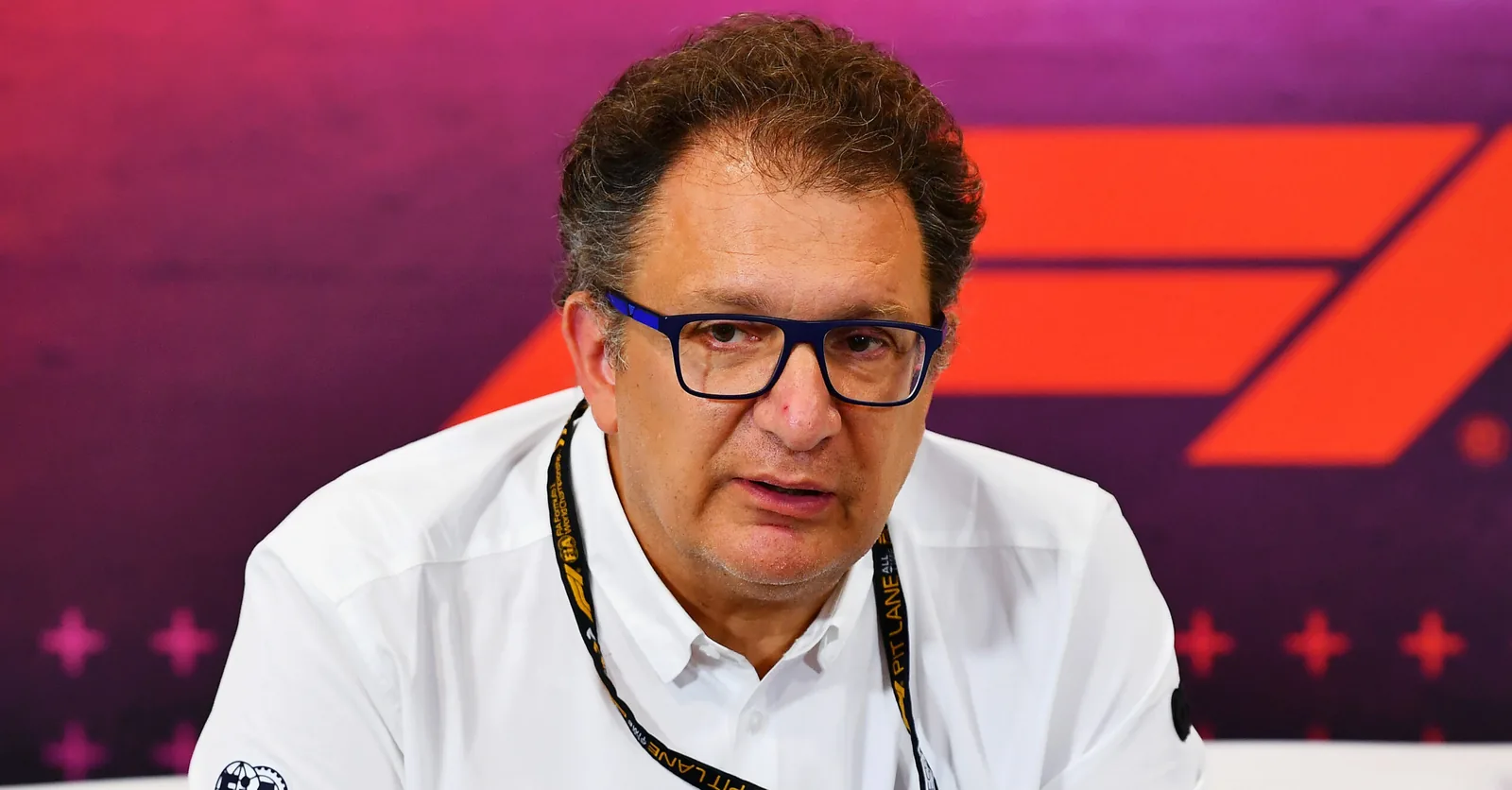
Despite there being no more Grands Prix on the calendar in April, it promises to be a crucial month for Formula 1. Following ongoing criticism of the new regulations, the FIA will meet with all parties involved during this spring break to potentially implement changes for the upcoming race weekend in Miami. Director Nikolas Tombazis emphasizes that these are minor interventions that teams can implement relatively quickly.
Read more Hamilton completes Pirelli test at Fiorano, new wet tires in the making
On Thursday, the first meeting regarding potential adjustments took place. The Guardian spoke with Tombazis about the ultimate goal of these meetings. “It’s not that we are discussing a complete overhaul of the rules,” the Greek began, before making a striking comparison. “It’s not a patient in the ICU; it’s a patient who needs to eat a few more apples every day. There is no question of open-heart surgery.”
It is not a mess
Yet the new regulations have regularly come under fire in recent months; from the media, but also from the drivers. Naturally, there is little criticism at the front of the field, but someone like Max Verstappen is openly questioning his future in the sport due to the heavy focus on energy management. After the last race weekend in Japan, the FIA also came under further pressure following Oliver Bearman’s heavy crash. The 50G impact on the guardrail was directly linked to the large speed differences resulting from the new regulations.
“There are topics we need to address, both from the perspective of drivability and safety,” Tombazis admitted. “I don’t want to trumpet: ‘Everything is fine, we don’t need to do anything,’ because clearly something needs to happen. On the other hand, I don’t want to say: ‘It’s a mess.’ We have fans who are happy with the show, we had an accident caused by specific aspects that we need to solve, and we have drivers who feel things can be improved,” he summarized. Furthermore, he is unimpressed by criticism from the drivers. “The headmaster or the referee,” he said, referring to the FIA, “usually has to endure criticism.”
Read more Reportage: Verstappen’s psyche: ‘Loss is not a breaking point, but a building block’
Bearman’s crash was a shock
Nevertheless, Tombazis acknowledges that major accidents like Bearman’s are ‘a shock’ to the organization. “Every high-speed accident is always a bit of a shock,” he continued. “To say it was expected would be incorrect, but the speed differences had indeed been identified as a risk.” However, the FIA does not want to make hasty decisions. “When we implement changes too hastily, there is a risk that we worsen the situation or cause all sorts of other problems,” Tombazis explained. “That is why we need time to analyze. Safety, of course, comes first.”
On April 16, the FIA will continue meeting about the future of the F1 regulations. On April 20, a final decision must be made in the presence of the team principals, engine manufacturers, and F1 CEO Stefano Domenicali. Tombazis explained that – due to the nature of the new rules – changes can be implemented quickly. “The rules do not require changes to the hardware, but possibly to some settings and software,” the Greek explained. “In principle, these can be adjusted very quickly, reducing speed differences and satisfying the drivers.”
Read more Arvid Lindblad looks back on first F1 races: ‘I am living my dream, so I feel no pressure’
Read everything about the Miami GP here